Tuesday, February 28, 2017

Post death testamentary trusts


View Blog Post death testamentary trusts by Matthew Burgess

Previous posts have touched on various forms of testamentary discretionary trusts, including 'post death' testamentary discretionary trusts http://blog.viewlegal.com.au/2010/05/testamentary-trusts-is-it-ever-too-late.html.

In very broad terms, these trusts are created so as to provide a pathway to access the excepted trust income rules under the Tax Act. In particular, they allow income to be distributed at adult rates to children under the age of 18.

While there are a number of rules that need to be complied with before setting up a post death testamentary trust, it is worth remembering that the structure is in fact available in a variety of circumstances, including:

  1. Where the deceased dies with assets in their own name and a basic will (i.e. not incorporating a testamentary trust);
  2. Where the deceased dies with assets in their name and has no will (i.e. they are intestate);
  3. Where the deceased dies with superannuation entitlements (including insurance); or
  4. Where the deceased dies with insurance entitlements.

Importantly, this type of trust is also available where the parties to a marriage separate and there are child support obligations that need to be satisfied.

View’s 90 minute webinar exploring the key issues in relation to post death trusts is available here - https://viewlegal.com.au/product/recorded-webinar-package/

Extracts of the webinar are also available via our podcast channel, see - https://viewlegal.com.au/view-podcasts/

Image credit: Markus Spiske cc

Monday, February 20, 2017

Gift and Loan Back Arrangements – A Practical Example


Earlier posts have looked at various aspects of ‘gift and loan back’ arrangements – see -

http://blog.viewlegal.com.au/2014/03/leading-gift-and-loan-back-case.html

http://blog.viewlegal.com.au/2014/04/how-gift-and-loan-back-arrangements-work.html

http://blog.viewlegal.com.au/2014/04/gift-and-loan-back-arrangements-some.html

As set out in earlier posts, and with thanks to the Television Education Network, today’s post considers some related practical issues in relation to gift and loan back arrangements in a ‘vidcast’ at the following link - https://youtu.be/hJy0OyOuLfE

As usual, an edited transcript of the presentation for those that cannot (or choose not) to view it is below –

Having done the trust split, what you might look at doing is a gift and loan back. That is to say the trustee that sits over a split trust will arrange for assets that are equal to the underlying interest in the asset to be gifted into a brand new trust.

The new trust will generally be a stock standard family trust that's controlled by the relevant beneficiary.

If the split trust makes a capital gift of the underlying capital value, not the interest in the asset itself, then what is being gifted is the dollar value of the asset as a cash gift. It can be a promissory note, round robin of cheques or whatever it needs to be.

The funds are gifted into a trust that’s controlled by the relevant beneficiary. What the beneficiary then does is lends that money back into the split trust.

That is step 1 is the gift.

Step 2 is the loan.

But at the same time as that new trust is making that loan, it will also take a mortgage out over the underlying assets in the split trust.

Thus you have effectively synthetically moved all of the equity out of the split trust into a brand new trust, which is absolutely controlled by the relevant beneficiary.

Furthermore, there's no mortgage duty on a gift and loan back arrangement. In other words, you can do all of the gift and loan back arrangement without any transaction costs.

The beauty of the strategy is that it still maintains the integrity of the initial trust split, but gives each of the ultimate family members, no matter what might go wrong between the family at that split trust level, the ultimate ability to call in that debt. While they might actually have to sell the underlying asset at that point, they will still ultimately have the underlying equity where it needs to be (that is in their sole control).

Tuesday, February 14, 2017

Pre-nups, pole dancers and PI insurance

View Blog Pre-nups, pole dancers and PI insurance by Matthew Burgess

The saga involving swimmer Grant Hackett suing two law firms for negligence is a high profile reminder of the difficulties in relation to 'pre-nups'.

Broadly the Hackett matter centred on allegations that the relevant law firms failed to properly advise him to create a binding financial agreement.

In particular, Hackett argued that the original agreement entered into before marriage failed to comply with the strict legal requirements under the Family Law Act. When the agreement was later updated after the birth of the couple's twin children the alleged difficulties with the agreement were not remedied.

In many respects the issues here are analogous to the relatively well known 'pole dancer' case of Wallace v Stelzer [2014] HCATrans 135 - so named because the husband met the wife at what was described as 'an adult entertainment venue' where the wife was working as a dancer. As usual, if you would like copies of the relevant decisions please email me.

At the heart of the pole dancer case was the husband's desire to avoid the terms of the binding financial agreement that saw him liable to pay $3million dollars to his former wife when their marriage ended after only 18 months.

Some of the arguments raised included that the lawyers failed to discharge their duty to properly explain the terms of the agreement - an allegation that would have seen the lawyers potentially liable in negligence if it had been held to be correct.

It was also argued that the agreement was void in relation to some technical aspects required to be complied with under the Family Law Act and that attempted legislative fixes to the rules were also invalid, in part because the changes purported to be retrospective. While it was ultimately held that the agreement was effective and the legislative changes were valid the extent of the litigation has seen many law firms, even those that specialise solely in family law, choose to no longer prepare binding financial agreements.

Image courtesy of Shutterstock

Tuesday, February 7, 2017

All Care, No Liability


View Blog All Care, No Liability by Matthew Burgess
One of the questions that comes up regularly is who is responsible for providing the legal advice in the adviser facilitated (or wholesale) solutions offered by View.

View Legal provides complete support of its documentation by providing legal signoff.

This approach is one that we take extremely seriously, for obvious reasons.

Ultimately, via the View Legal platform, the adviser who facilitates the process is issued a compliance driven certificate that provides as follows –

‘View Legal Pty Ltd confirms it has provided independent legal advice to the client in relation to all legal documentation.’

There are no footnotes or disclaimers.

This one sentence certificate is issued without qualification.

Future posts will provide an interesting contrast by highlighting the style of disclaimers that most (if not all) other providers in this area rely on.

Image courtesy of Shutterstock

Tuesday, January 31, 2017

Estate planning and organ donation

View Blog Estate planning and organ donation by Matthew Burgess

Last week’s post 'Keith Richards, estate planning, body disposal and keeping it Respectable' considered a number of different alternatives in relation to body disposal following death.

As is well known, it is possible to donate organs for medical purposes, which in Australia is via an opt in process and requires registration on the Australians Organ Donor Register – see http://www.humanservices.gov.au/customer/services/medicare/australian-organ-donor-register .

Renowned behavioural economist Dan Ariely (among others) has commented on the level of organ donation in jurisdictions where there is an opt out approach adopted – in these jurisdictions, the level of uptake is astronomically higher, see - https://www.thersa.org/discover/publications-and-articles/rsa-blogs/2013/02/increasing-organ-donation--but-not-the-way-you-think.

It is important to note that generally if a person wishes to make their organs or body available for medical research, there are specific additional steps that must be taken, prior to death, to ensure that the necessary consents are provided.

Links to the relevant websites in each Australian jurisdiction are set out below.
  1. New South Wales - https://www.sydney.edu.au/medicine-health/industry-and-community/support-us/body-donations.html
  2. Victoria - http://medicine.unimelb.edu.au/anatomy-neuroscience/ehs/body-donor-program
  3. Queensland - http://www.uq.edu.au/sbms/body-donor-program
  4. WA - http://www.aphb.uwa.edu.au/body-bequest/donors
  5. South Australia - https://health.adelaide.edu.au/engage-with-us/facilities-services/body-donation-program
  6. Tasmania - http://www.utas.edu.au/medicine/medicine/programs/body-bequest
  7. ACT - http://medicalschool.anu.edu.au/getting-involved/body-and-tissue-donations
  8. Northern Territory – no program currently available.
Image courtesy of Shutterstock

Tuesday, January 24, 2017

Keith Richards, estate planning, body disposal and keeping it Respectable

View Blog Keith Richards, estate planning, body disposal and keeping it Respectable by Matthew Burgess

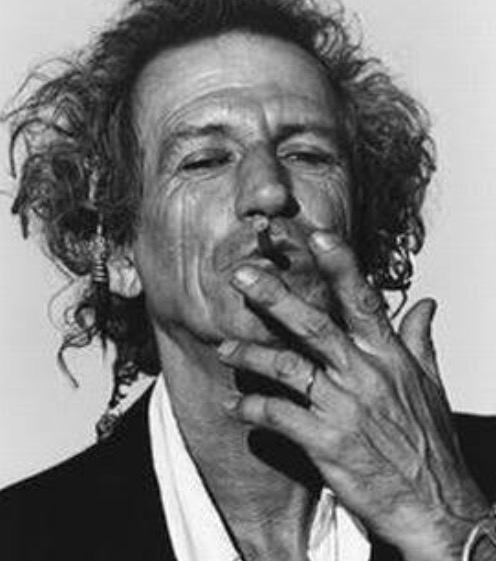
Last week’s post mentioned Keith Richards and it reminded me of one death-related story that Keith Richards is famous (or perhaps more accurately infamous) for. In particular, the way that Keith Richards (allegedly) disposed of his father’s ashes, as profiled in more detail below.

Certainly, one aspect of estate planning that often receives less attention than many other areas is body disposal.

Ideally, a will maker’s wishes in relation to body disposal should be communicated to immediate family members or the executor of the estate.

A memorandum of directions, letter of wishes or similar style document is often the best mechanism in this regard.

A Word version of a template memorandum of directions is available at the View Legal website – www.viewlegal.com.au (via the ‘learn’, then ‘resources’, then ‘adviser toolkit’ tabs) or download our app –
  1. Apple – https://appsto.re/au/7ayT6.i
  2. Android – https://play.google.com/store/apps/details?id=view.legal.mod
At least in western culture, the three most traditional body disposal approaches are:
  1. burial; 
  2. cremation; 
  3. burial at sea. 
Some alternative approaches include:
  1. Diamonds – see - http://www.lifegem.com/?gclid=CI-UxtmO4NACFYkrvQodF_UJAw
  2. Mummification – see - http://en.wikipedia.org/wiki/Mummy
  3. Cryogenically frozen – see - http://en.wikipedia.org/wiki/Cryopreservation and the announcement of an Australian firm offering the solution – see – http://www.news.com.au/technology/science/human-body/southern-cryonics-plans-to-break-ground-on-worldleading-nsw-facility-in-2017/news-story/145d76fec25f4827b229fb09e29579e3
  4. Coral reefs – see - http://www.eternalreefs.com/
  5. Composting - http://www.urbandeathproject.org/
  6. Deluxe cardboard box - http://www.funeraldirectorsaustralia.com.au/cardboard-coffins-australia/
  7. Vinyl records – see - http://www.andvinyly.com/
  8. Firecrackers – see - http://www.ashestoashes.com.au/
  9. Snorting (ie the Keith Richards play; note - the mixing of ashes with illicit substances is generally regarded as optional) – see - http://www.dailymail.co.uk/tvshowbiz/article-1323930/Keith-Richards-I-really-DID-snort-fathers-ashes.html
  10. Smoking – as a variation on the snorting idea, friends of rap singer Tupac allegedly mixed his ashes with marijuana and smoked them – see - http://www.independent.co.uk/news/people/news/tupac-shakurs-ashes-smoked-2346879.html
  11. An hour glass – see - http://www.inthelighturns.com/hourglass-urns.html
  12. Glass orb – see - http://www.cremationsolutions.com/information/cremation-urn-information/cremation-glass-keepsake-information
  13. Snow Globes – see - http://www.bullworks.net/invest/globe.htm
  14. Space flight (as made famous by James Doohan, the actor who played Scotty in Star Trek, whose ashes were sent into space on a Elon Musk SpaceX rocket launch) – see - http://www.celestis.com/
  15. Shot out of a cannon – Hunter S. Thompson style, see – http://www.espn.com/espn/news/story?id=2139349, perhaps helping deliver on his famous comment that - 
‘Life should not be a journey to the grave with the intention of arriving safely in a pretty and well preserved body, but rather to skid in broadside in a cloud of smoke, thoroughly used up, totally worn out, and loudly proclaiming "Wow! What a Ride!”’

Tuesday, January 17, 2017

Bowie, baby boomers and Big Bang Disruption – Why 2016 was the new normal for celebrity deaths


Biew Blog Bowie, baby boomers and Big Bang Disruption – Why 2016 was the new normal for celebrity deaths by Matthew Burgess

Fame

Fame, it's not your brain, it's just the flame
That burns your change to keep you insane (fame) …


There has been significant commentary about the apparently overwhelming number of ‘celebrity’ deaths in 2016.

One of the arguably better summaries is provided via the video at the following link - https://youtu.be/YpSOtX4S4zo

Sign o' the times

Some say man ain't happy truly until a man truly dies

There are many who are suggesting however that 2016 merely marks the start of the ‘new normal’ in relation to the death rates of well-known celebrities.

Two significant reasons for this are:
  1. the baby boomer population bubble; and 
  2. ‘Big Bang Disruption’ theory. 
The socioeconomic impact of the baby boomer generation as it has moved through the lifecycle is well documented.

As the following graph demonstrates, even the youngest baby boomers are now in their 50s, and the oldest are into their 70s.

While the baby boomer generation has caused a ‘bubble’ at each other stage of their lifecycle, because of the way life expectancies are spread, it is likely that instead of a bubble, there will be instead a jump up in overall deaths that will be sustained over a long period – in other words, reinforcing the idea that 2016 may simply be part of the new normal for deaths of popular culture icons.

This outcome is arguably further reinforced by the significant growth in elder suicide rates in recent times – see for example - https://fee.org/articles/work-or-die/


The Edge of heaven

Tell me that my soul’s forgiven

Malcolm Gladwell popularised the concept of ‘the tipping point’ – see –https://www.gladwellbooks.com/titles/malcolm-gladwell/the-tipping-point/9780316316965/ 

One key, although often overlooked, aspect of this theory in popular culture was the timeframe over which popularity of something evolved and maintained cultural interest levels.

Throughout the era of key popularity for baby boomer icons, the lifecycle of popularity was at least 10 years, and in many instances far longer.

Primarily driven by technology innovations, Big Bang Disruption theory shows that the lifecycle of popularity in the post iphone era is as a general rule significantly shorter, although often more intense than in the earlier modern eras. In other words – think (in western culture) Gangnam Style by Psy (see - https://www.youtube.com/watch?v=ASO_zypdnsQ) the most watched YouTube music video ever with around 2.8 billion views, as compared to (say) the sustained successful career of Madonna which arguably started on Countdown in 1984 – see https://www.youtube.com/watch?v=_QB9YVxn1xo.

The distinctions between the two theories are best explained by the following diagram.


Gimme Shelter

Come on
Oh, a storm is threat'ning
My very life today
If I don't get some shelter
Oh yeah, I'm gonna fade away


The historically sustained period of popularity and the sheer size of the baby boomer generation therefore will arguably combine to mean that in the future, 2016 will not be seen as an outlier year for celebrity deaths.

As with any theory however, there will be exceptions, and in this space, the exception is arguably the rule that is Keith Richards.

Few can name a harder living baby boomer celebrity, and yet without wishing to trigger a Murphy’s Law outcome, at the age of 73, Richards continues to defy most commonly held assumptions about his life expectancy.